Fine-Tuning LLMs at Home with Unsloth: A Step-by-Step Guide
A step-by-step walkthrough of Fine-Tuning LLMs at Home with Unsloth — the exact actions, the common pitfalls, and what to check when you are done. · 4 min read
TikDown Editorial · Published on October 10, 2026
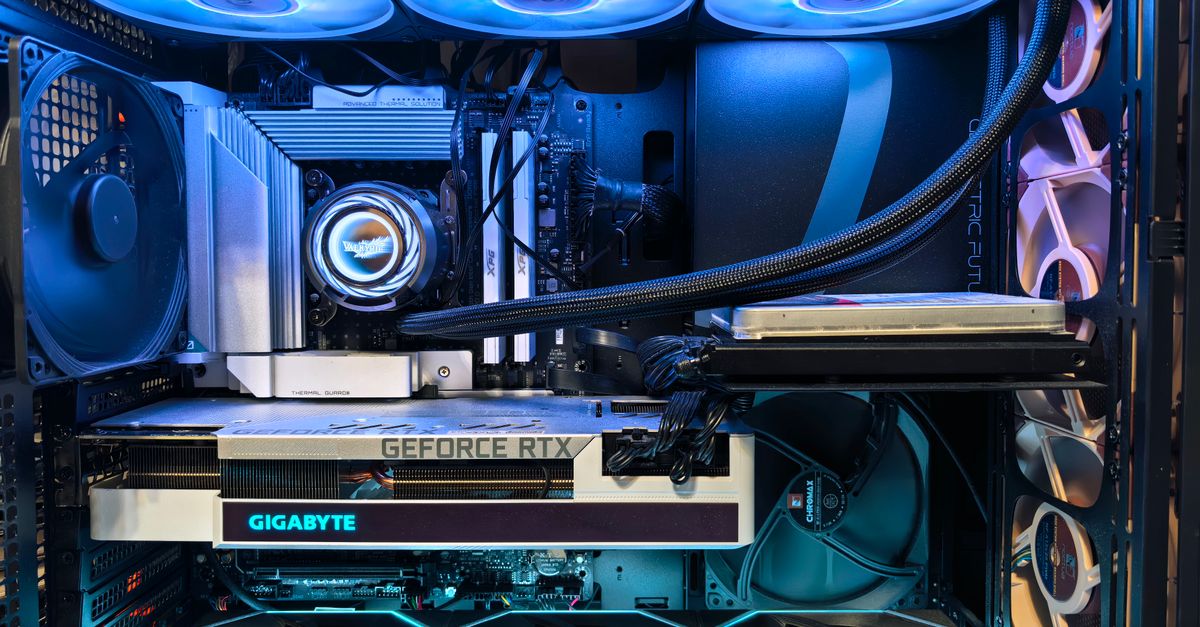
Every few years a topic like Fine-Tuning LLMs at Home with Unsloth crosses from specialist circles into everyday work. Training custom models on consumer graphics cards. Early adopters gain an edge, but only when they separate durable value from passing noise. This guide gives you that filter: the essentials, the trade-offs, and a sane way to start.
Fine-Tuning LLMs at Home with Unsloth has moved from experimental curiosity to a practical part of how modern teams work. Training custom models on consumer graphics cards. Understanding where it fits — and where it does not — is the first step toward using it well. This article breaks the topic down without hype, so you can decide what genuinely deserves a place in your workflow.
What to know before you start
One underappreciated truth about Fine-Tuning LLMs at Home with Unsloth is that context quality beats tool choice. Training custom models on consumer graphics cards. Two people using the same approach get wildly different results because one feeds it clear goals, examples, and constraints while the other wings it. Invest in inputs — briefs, examples, criteria — and the outputs largely take care of themselves.
Most confusion around Fine-Tuning LLMs at Home with Unsloth comes from mixing up three different questions: what the technology can do, what it reliably does, and what it should be trusted to do unsupervised. Training custom models on consumer graphics cards. Keep those questions separate and nearly every decision gets easier — which use cases to try first, how much oversight to keep, and when to walk away.
• Document what works: prompts, settings, and checklists your future self will thank you for.
• Keep a human in the loop for anything published, shipped, or sent to customers.
• Compare at least two options before committing to a tool, vendor, or workflow.
The method, step by step
Scaling Fine-Tuning LLMs at Home with Unsloth is mostly about removing bottlenecks one at a time. Training custom models on consumer graphics cards. First the skill bottleneck, solved with templates and examples. Then the review bottleneck, solved with checklists and sampling. Then the cost bottleneck, solved by reserving the heavy machinery for the work that actually needs it. Each stage unlocks the next.
Failure modes are predictable once you know where to look. Training custom models on consumer graphics cards. Vague goals produce vague results, edge cases surface exactly when stakes are highest, and silent degradation creeps in when nobody owns quality. Name an owner for output quality, schedule periodic audits, and keep a log of failures so patterns become visible before they become expensive.
Step-by-step instructions
Step 1 — Write down your current baseline: cost, time, and quality of how you do this today.
Step 2 — Choose one metric that will decide whether the experiment continues after two weeks.
Step 3 — Start with free or trial tiers until the workflow proves it deserves a budget.
Step 4 — Keep a decision log of what you tried, what you kept, and why — memory lies, logs do not.
Step 5 — Share the winning workflow with one colleague and watch where they get confused; fix that part.
The expensive mistakes are never technical — they are vague goals, skipped reviews, and scaling a workflow nobody validated first.
The 2026 outlook: what to watch
Looking ahead, Fine-Tuning LLMs at Home with Unsloth is on a clear trajectory: more capable, cheaper to run, and embedded in more of the tools you already use. Training custom models on consumer graphics cards. The practical consequence is that advantage shifts from access to judgment — everyone will have the same capabilities, so the winners will be those with the best taste, criteria, and review discipline.
The most durable bet is on fundamentals that survive every hype cycle. Training custom models on consumer graphics cards. Clear writing, critical review, measurement, and domain expertise appreciate in value no matter which specific tool wins. Spend most of your learning budget there and treat individual tools as interchangeable. Adoption curves beat announcement dates: the interesting question is always cost, reliability and who maintains it.
Key takeaways
• Scale only what survives a two-week trial on real work.
• Revisit tools quarterly — today's leader is tomorrow's default.
• Measure a baseline so improvement is a fact, not a feeling.
• Keep human review on anything that reaches customers or production.
Common mistakes to avoid with Fine-Tuning LLMs at Home with Unsloth
The same failure patterns repeat everywhere. First, skipping the baseline: without knowing current cost and quality, every claim of improvement is theater. Second, trusting first drafts in high-stakes settings — the technology is a brilliant intern, not a licensed professional. Third, tool-hopping: switching platforms every month resets your learning curve and scatters your templates. Fourth, ignoring the boring maintenance: stale prompts, expired credentials, and unreviewed edge cases quietly rot good systems. Audit for all four quarterly and most disasters never happen.
In the end, Fine-Tuning LLMs at Home with Unsloth is a force multiplier for people who already know what good looks like. Training custom models on consumer graphics cards. Sharpen your criteria, keep humans in charge of quality, and let the technology do what it does best — speed up the path from idea to finished work.